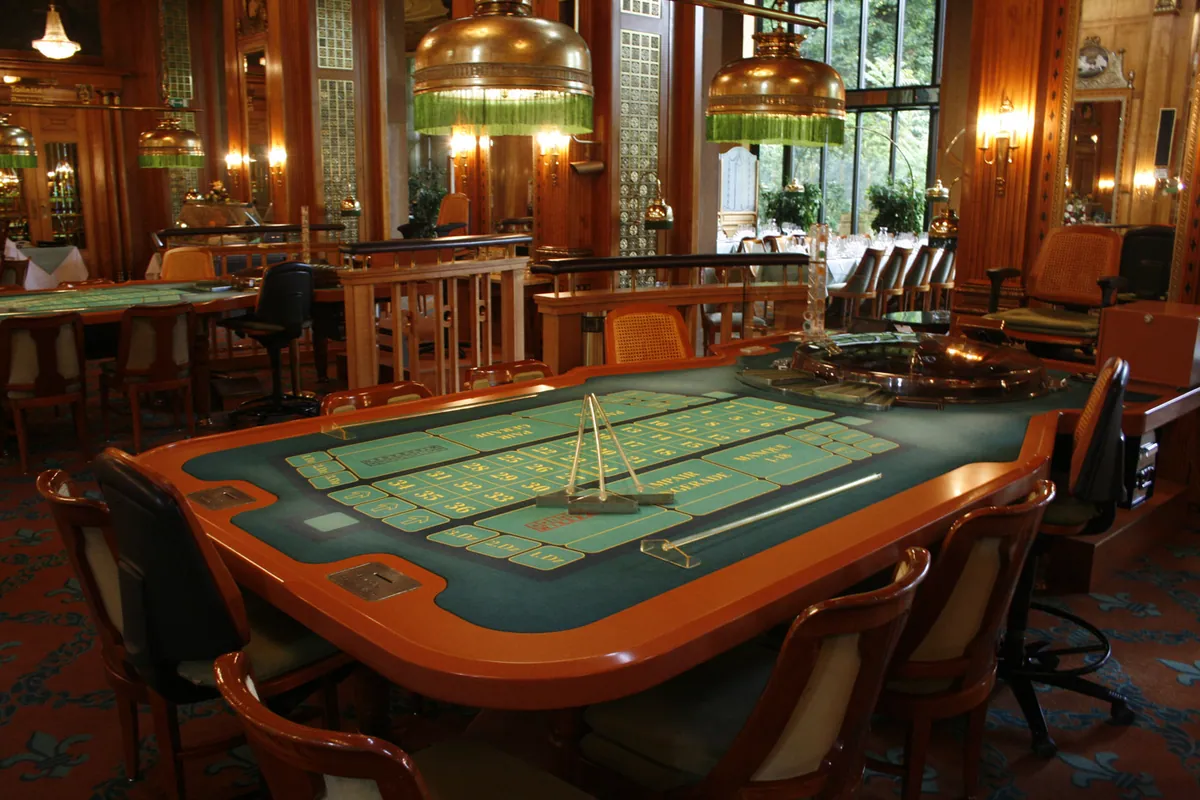
A casino is a venue or service that offers games played under set rules, often for stakes and possible prizes. A land-based casino has a physical location; an online casino presents games through a website or app. A win is possible, but gambling is not a reliable way to earn income. A site’s name or appearance does not establish its legal status, terms or trustworthiness in any particular place.
What makes a game a gambling game?
In everyday use, a gambling game involves a stake or something of value put at risk for a possible prize, with an uncertain outcome. Luck may determine the result, or it may interact with decisions and skill. The rules, prize, stake and local law matter: cards alone do not make a game gambling, and calling a product a “game” or “social casino” does not settle its legal status.
Legal definitions differ by jurisdiction. For example, section 3 of the UK Gambling Act 2005 addresses gaming, betting and lotteries under British law; it is not a universal test. A computer game styled like a casino does not necessarily involve a cash stake or a prize that can be withdrawn.
Land-based, online and live casinos
These terms describe different ways a casino game is offered, not a guarantee about its rules or legal status:
- Land-based casino: games are offered at a physical venue. A table may use a dealer, cards, dice, a wheel or other equipment.
- Online casino: games and account features are delivered through software. A game may be software-based, or it may stream a physical table.
- Live casino: a video stream shows a real table or studio, commonly with a human dealer. The exact setup varies. A live stream does not by itself prove how a result is generated or that a particular service is fair.
Software games may use a random number generator (RNG) to determine random events under their rules. An animation alone does not establish that the system works correctly; see game fairness and testing.
A dealer runs or deals a table game; croupier is another common term, especially in casino settings. In a house-banked game, such as many roulette or blackjack formats, players play against the rules of the game and the house (the casino operator), not against one another. In a peer-to-peer game, players compete with other players; a platform may provide the service or take a fee. The game rules and terms explain which model applies.
The operator runs the service and sets its account terms; a game provider develops or supplies an individual game. A platform is the software through which games and account features are presented. These roles can belong to one company or several. A provider’s logo does not by itself establish the operator’s licence or the service’s legal status.
What games might a casino offer?
Common categories include:
- Slots: software or machines that resolve a wager according to the game’s rules and outcome model. A displayed spin does not make the next result predictable. See our slot guide.
- Table games: roulette, blackjack and other games with a defined table layout, actions and settlement rules. Players’ decisions can matter in some games, but do not guarantee a win. Read the separate guides to roulette and blackjack.
- Poker: often a player-versus-player game; the platform may charge a fee. Its structure is different from a house-banked casino game.
- Other offerings: a site may also list betting or lottery products. Sharing a website does not make these the same product or give them the same rules.
The exact catalogue and rules vary by venue and service. This is a description of formats, not a recommendation or a directory of places to play.
Chance, skill and the house edge
Games differ in how much outcomes depend on chance, player decisions, or both. A slot result is determined by its game model; in blackjack, a player chooses among actions within the rules. Neither an individual result nor the game’s label tells you everything about its odds.
The house edge is a mathematical feature of a specified game and its rules: over the model’s long run, the expected result favors the house. It is not a prediction of one round or session, and the edge can depend on the game’s version and choices available. RTP (return to player) is another theoretical long-run measure, not a promise of what any one player will receive. See how RTP works. No betting approach guarantees profit.
Chips, credits, cash and balances
Casino vocabulary can make different kinds of value sound alike. Check the game and account terms rather than assuming that every displayed unit is cash:
- Chips: physical tokens used at some tables to represent stakes. Their value depends on the venue and table; they are not automatically equivalent to cash away from that setting.
- Credit and denomination: credit may mean a game unit, not a loan. The denomination is the value assigned to that unit. Software may display credits or currency; the game’s rules show how a stake is calculated.
- Cash or real-money balance: funds recorded for money play, subject to the service’s rules and any applicable restrictions. A balance shown on screen is not necessarily immediately withdrawable.
- Bonus balance: promotional funds or benefits with conditions. They may have separate wagering or withdrawal terms and should not be treated as unrestricted cash. Read the bonus terms guide.
- Demo balance: virtual units used for practice or entertainment. A demo result is not cash that can be withdrawn and does not predict the outcome of real-money play. Free access does not remove applicable age or location restrictions. See what demo mode means.
A deposit is money added to an account; a stake is the amount committed to a particular play; a payout is the amount credited under the game’s rules after an outcome. A payout may include the returned stake. Withdrawal is a separate transfer, and neither a payout nor a withdrawal alone shows net profit.
How does a casino differ from a bookmaker or a lottery?
A casino game typically settles according to the rules of the game itself. A sportsbook or bookmaker accepts bets on the outcome of an event, such as a match, under the terms of that bet. A lottery distributes prizes under its draw or entry rules. A single operator may offer more than one of these products, but they are not interchangeable categories.
Poker may be peer-to-peer, while roulette and many blackjack games are house-banked. A computer or social game may use casino imagery without cash stakes or withdrawable prizes. A product’s legal classification depends on its actual mechanics and applicable law, not just its name. Binary options are a separate financial product, not simply another casino game.
Are online casinos legal everywhere?
No single answer applies worldwide. Laws and access conditions vary by country and, in some places, by region. A foreign licence does not by itself show that a service is lawful where you are, and a regulator’s logo is not proof of a particular operator’s status. Check the relevant official rules and licence register for your location; our licence-check guide explains what to look for. This overview is not legal advice.
Sources and scope
The legal and technical references below were previously read and recorded in the Russian source article’s editorial notes on 26 November 2026; they were not freshly retrieved for this English adaptation. Their scope is limited:
- UK Gambling Act 2005, section 3: British statutory categories for gaming, betting and lotteries, not a worldwide definition.
- UK Gambling Commission, RTS 3: requirements for game descriptions, rules and likelihood of winning within the UK framework.
- UK Gambling Commission, RTS 7: requirements for random outcomes within that regulatory framework.
- UK Gambling Commission, RTS 6: requirements for free-play games in specified circumstances under that framework.
- Evolution: Live Roulette: a supplier’s description of its own live roulette formats, not an independent audit or a description of every live game.
This is a general introduction, not a review of a named operator, a legal conclusion, or a promise about results. Rules, availability and terminology vary by game and location.